119 stories
·
0 followers

Pluralistic: Bonta sold us out to Trump's oligarchs (22 Sep 2026)

1 Share


Today's links


The Warner Brothers tower. It has been tinted orange and is leaning at a 30-40' angle. It is surmounted by Trump's hair. The tower is wavering. The background is ominous, red-tinged clouds, through which peek a marching army of banner-waving demons.

Bonta sold us out to Trump's oligarchs (permalink)

Well, fuck. California Attorney General Rob Bonta just surrendered to the Trump-aligned Ellison billionaires who want to take over and destroy Warners, merging it with the chudded out husk they've made of Paramount, leaving these two colossal, corrupt, useless assholes to control Warners, Paramount and Tiktok:

https://www.reuters.com/legal/litigation/paramount-settles-with-california-other-states-clearing-major-hurdle-warner-bros-2026-09-21/

In announcing the settlement, Bonta's office touted a long list of concessions the AG had wrung from the Ellisons before greenlighting this indefensible, illegal and dangerous merger. Every! single! one! of these concessions is meaningless bullshit. Bonta just handed the American movie and TV sector to two of the most odious creeps to draw breath, surrendering without firing a shot.

For a breakdown of how fucking useless this settlement is, read (who else?) Matt Stoller, whose piece breaking it down is titled "Happy Oligarch Day!"

https://www.thebignewsletter.com/p/happy-oligarch-day-as-trump-aligned

The first thing Stoller points out is that every one of the "commitments" in the settlement only matter if Bonta's office enforces them. Bonta's office will never have as much leverage over Warnermount as it has today, when the company is paying a $7m/day "ticking fee" while the merger is stalled (thanks to an injunction secured by the Hollywood unions, whom Bonta has just royally fucked, because they can't afford to litigate this case without the AG office's backing). So even if any of these conditions meant anything (which they do not), they won't be enforced. If Bonta can't bring Warnermount to heel today, when they have to pay $7m/day for so long as they're crosswise with him, how will he ever get them to do shit?

He.

Will.

Not.

But it doesn't matter. It doesn't matter! Because the Ellisons have given Bonta nothing. Take the guarantee that Warnermount "will make 30 films" for the next two years, and 32 films thereafter. That's what's been announced, but when former FTC Commissioner Alvaro Bedoya dug into the actual wording, he discovered they are only committing to distributing 30 films, and to making 15 films, which they are allowed to co-produce with other studios. They made 18 movies last year. Under the terms of this deal, they have "committed" to making fewer movies than they make today:

https://x.com/BedoyaUSA/status/2102173188557799773

They've committed to not selling the Warner lot. For five years. But they are allowed to move it out of LA, which is something my neighbors in Burbank are doubtless delighted to learn. After that, they can move it to whatever state offers them the biggest sweetheart tax deal and the weakest union protections.

They are prohibited from gouging the theater chains and putting them out of business to promote their streaming business. For three years. After that, they can let 'er rip.

Then there's the "editorial board" that will oversee the Ellisons' management of CNN and MSNBC, nominally to keep it from getting the CBS treatment and going 24/7 Great Replacement/Haitians eating dogs/Charlie Kirk funeral pyrotechnics spectaculars. Guess who chooses the members of the editorial board? The Ellisons. As Stoller writes, "it’s downright comical [that] they demanded that David Ellison not corrupt CNN by having David Ellison appoint a board ensuring that David Ellison not do that."

But you can ignore everything you've just read, because the settlement includes a clause that says they don't have to do any of the things it says they have to do. This is the "force majeure" clause, which is not like a normal force majeure clause (which allows the parties to back out of their commitment in case of war, wildfires, etc). This force majeure clause lets Warnermount tear up the entire agreement if there's a strike or a recession.

So: if (when) the Hollywood unions go on strike over this betrayal (which they absolutely should do), the agreement becomes null. And if (when) the AI bubble bursts and there's a massive recession, the agreement becomes null. And if (when) Trump's War on Oil plunges the US into Jimmy Carter-style oil economic tsunami, the agreement becomes null.

As Stoller points out, 12 State Attorneys General signed this piece of shit. Every one of them is a lawyer, and every one of them has a staff of lawyers. None of the glaring, catastrophic, utterly disqualifying defects in this "settlement" can possibly be a surprise to them. These Democrat warriors surrendered to Trump's oligarchs, giving them everything, including control over the American film and TV industry for so long as it limps along. They just assumed you wouldn't notice.

Stoller says he's "in a strangely good mood" about this because of all the political capital it took to get this over the line (unlike, say, Disney-Fox, which sailed through with nary a hitch), saying that it indicates that the public is fed up with monopolies. He's right, they are fed up with monopolies. Everyday Americans, Democrats and Republicans, are telling pollsters they'd back a politician who campaigned on shattering monopoly power:

https://libertyandpower.substack.com/p/pollsters-urge-dems-to-attack-monopoly

So this leaves us to wonder why Bonta (who talked tough in public about this merger and insisted he would never settle for this kind of weaksauce) stabbed the state, the country, Hollywood workers, and the American public in the back like this? Stoller's theory is that Bonta was isolated by "Democratic insiders" who wouldn't back his play.

OK, fine. As Stoller writes, there's no ambiguity here, this is just straight up corruption, oligarch pals of the President getting to roll up and gut the industry's globally important, culturally essential media sector. The "teachers' pets" of the Democratic Party have once again sold out working people in a bid to be liked by the rich and powerful.

This will fuel (more) distrust of America's political class, a distrust that has been repeatedly earned over decades and especially in this decade. Our leaders are "malevolent liars." It's been true for a very long time, but we can no longer pretend otherwise. Perhaps Stoller's right and this means we'll finally get some real change. I hope so. But for now, I'm just furious.

(Image: Todd Dwyer, CC BY-SA 3.0, modified)


Hey look at this (permalink)


A shelf of leatherbound history books with a gilt-stamped series title, 'The World's Famous Events.'

Object permanence (permalink)

#25yrsago Finnish hacker's homebrew OS fits on a floppy https://web.archive.org/web/20010923224224/https://www.menuetos.org/

#20yrsago Can RIAA sue for songs they never verified by downloading from you? https://recordingindustryvspeople.blogspot.com/2006/09/preclusion-motion-filed-in-umg-v.html

#15yrsago Elizabeth Warren explains why taxing the rich isn’t “class warfare” https://www.youtube.com/watch?v=htX2usfqMEs

#15yrsago DoJ audit: meeting served $16 muffins and $8 coffee https://web.archive.org/web/20110921160806/http://news.yahoo.com/16-muffins-8-coffee-served-justice-audit-023623142.html

#10yrsago Psychology’s reproducibility crisis: why statisticians are publicly calling out social scientists https://statmodeling.stat.columbia.edu/2016/09/21/what-has-happened-down-here-is-the-winds-have-changed/

#10yrsago Notorious copyright troll sentenced to 20 weeks’ prison time for beating Uber driver https://torrentfreak.com/copyright-troll-partner-kicked-uber-driver-in-the-head-160923/

#10yrsago Understanding vulvas: what do they really look like? https://www.youtube.com/watch?v=qAFvGrOwVug

#10yrsago The American public subsidized $125m executive bonus for Wells Fargo exec who led massive fraud https://web.archive.org/web/20160922140758/https://www.ibtimes.com/political-capital/taxpayers-subsidized-wells-fargo-executive-pay-amid-banks-fraud-2419456

#5yrsago The music monopolists https://pluralistic.net/2021/09/23/remedies-beyond-antitrust/#face-the-music

#5yrsago The Halloween Moon https://pluralistic.net/2021/09/23/remedies-beyond-antitrust/#creepypasta

#1yrago The enshittification of solar (and how to stop it) https://pluralistic.net/2025/09/23/our-friend-the-electron/#to-every-man-his-castle


Upcoming appearances (permalink)

A photo of me onstage, giving a speech, pounding the podium.


A screenshot of me at my desk, doing a livecast.

Recent appearances (permalink)


A grid of my books with Will Stahle covers..

Latest books (permalink)


A cardboard book box with the Macmillan logo.

Upcoming books (permalink)

  • "The Post-American Internet," a geopolitical sequel of sorts to Enshittification, Farrar, Straus and Giroux, 2027

  • "Unauthorized Bread": a middle-grades graphic novel adapted from my novella about refugees, toasters and DRM, FirstSecond, April 20, 2027

  • "Enshittification, Why Everything Suddenly Got Worse and What to Do About It" (the graphic novel), Firstsecond, 2027

  • "The Memex Method," Farrar, Straus, Giroux, 2027


Colophon (permalink)

Today's top sources:

Currently writing:

  • “Once Is Enemy Action,” a science fiction novel about the origins of modern technofascism. Today's words: 508 (17556 total).

  • "The Post-American Internet," a sequel to "Enshittification," about the better world the rest of us get to have now that Trump has torched America. Fourth draft completed. Submitted to editor.

  • A Little Brother short story about DIY insulin PLANNING


This work – excluding any serialized fiction – is licensed under a Creative Commons Attribution 4.0 license. That means you can use it any way you like, including commercially, provided that you attribute it to me, Cory Doctorow, and include a link to pluralistic.net.

https://creativecommons.org/licenses/by/4.0/

Quotations and images are not included in this license; they are included either under a limitation or exception to copyright, or on the basis of a separate license. Please exercise caution.


How to get Pluralistic:

Blog (no ads, tracking, or data-collection):

Pluralistic.net

Newsletter (no ads, tracking, or data-collection):

https://pluralistic.net/plura-list

Mastodon (no ads, tracking, or data-collection):

https://mamot.fr/@pluralistic

Bluesky (no ads, possible tracking and data-collection):

https://bsky.app/profile/doctorow.pluralistic.net

Medium (no ads, paywalled):

https://doctorow.medium.com/

Tumblr (mass-scale, unrestricted, third-party surveillance and advertising):

https://mostlysignssomeportents.tumblr.com/tagged/pluralistic

"When life gives you SARS, you make sarsaparilla" -Joey "Accordion Guy" DeVilla

READ CAREFULLY: By reading this, you agree, on behalf of your employer, to release me from all obligations and waivers arising from any and all NON-NEGOTIATED agreements, licenses, terms-of-service, shrinkwrap, clickwrap, browsewrap, confidentiality, non-disclosure, non-compete and acceptable use policies ("BOGUS AGREEMENTS") that I have entered into with your employer, its partners, licensors, agents and assigns, in perpetuity, without prejudice to my ongoing rights and privileges. You further represent that you have the authority to release me from any BOGUS AGREEMENTS on behalf of your employer.

ISSN: 3066-764X

Read the whole story
SimonHova
3 hours ago
reply
Greenlawn, NY
Share this story
Delete

I rented a car, and within hours, my driver's license was for sale

1 Comment

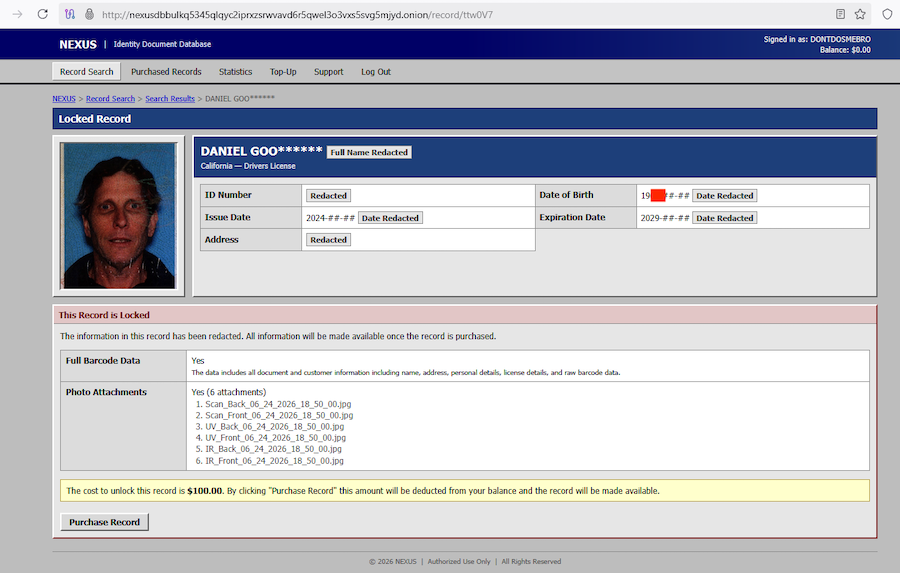
Not long ago, I rented an SUV from a well-known car rental company. Within hours of an employee scanning my driver's license, a high-resolution scan of my ID was available for sale on the dark web.

An exposé published Tuesday by KrebsOnSecurity reports that my license was one of more than 153 million that were available through Nexus, the name of the new ID theft service. Like other driver's licenses available there—including some belonging to journalist Brian Krebs, his mother, an FBI assistant director, and several security researchers—my license was purported to include multiple image files showing both the front and back of the ID. Besides a basic image scan, the files also captured the images in the infrared and ultraviolet spectrums. Presumably, the additional formats may allow cloned-based counterfeit IDs to pass hologram tests.

Growing by the day

Besides advertising the availability of driver's licenses, Nexus offered to sell a bevy of other forms of ID. They included:

Read full article

Comments


Read the whole story
SimonHova
19 days ago
reply
The ending of the story is almost more troubling, that they are pretty sure they know who's being hacked, and they don't want to release details as a result. It's like coming on a crime as it happens.
Greenlawn, NY
Share this story
Delete

Trade

4 Comments and 12 Shares
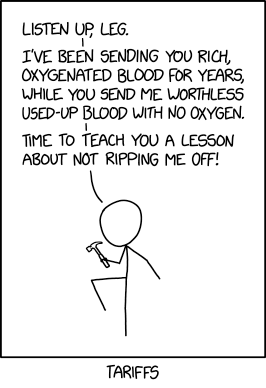
"You legs may have a comparative advantage at running, but we arms have a competitive advantage at swinging hammers, so unless you accept that we're the dominant limbs and stop hogging the oxygen, that running advantage won't be around for long."
Read the whole story
SimonHova
22 days ago
reply
Finally we are able to close the political cartoon deficit that has been open since Smoot-Hawley.
Greenlawn, NY
Share this story
Delete
3 public comments
satadru
26 days ago
reply
Sigh...
New York, NY
cjheinz
26 days ago
reply
More, please.
Lexington, KY; Naples, FL
alt_text_bot
26 days ago
reply
"You legs may have a comparative advantage at running, but we arms have a competitive advantage at swinging hammers, so unless you accept that we're the dominant limbs and stop hogging the oxygen, that running advantage won't be around for long."
Pylgrimm
26 days ago
"But you need us for getting around!" "Well, you need us MORE to swing a hammer." How many times in our life you think swinging a hammer is going to be more relevant than moving freely??" "There you have it, my fellow upperbodians, how uppity these lowerbodians can get after weak policies have allowed them to do whatever they want all these years! We tried to be nice and just do the right thing, but I see the only way forward is putting the fear of god in them and any other limbs or organs that refuse to admit our supremacy!" *replaces hammer with saw*

The Watchdogs Are Barking Themselves Hoarse

1 Comment

Last May, President Trump held an “intimate” dinner at his members-only golf club in Virginia for the top-220 investors in $TRUMP, a meme coin he launched days before the start of his second term that, by the end of 2025, would generate $636 million for him. About 100 protesters gathered outside in rain jackets, baseball caps, and muddy sneakers to confront the dinner guests arriving in shiny dress shoes, tuxedos, and black Cadillac SUVs. They pointed to the dinner as the encapsulation of the troublesome grift of Trump’s second term: trading personal access to the president in exchange for cash and funneling money to a Trump-owned property. “This is like the Mount Everest of corruption,” Senator Jeff Merkley of Oregon, a Democrat, said that night, standing before a crowd spotted with signs reading GRIFTER IN CHIEF and DON THE CON.

But a year later, when Trump hosted the winners of the second iteration of the so-called crypto contest at a luncheon gala in Mar-a-Lago in Florida, no large group of protesters greeted the attendees. The private Florida resort is a logistically more challenging location for a protest than a golf club 45 minutes from downtown Washington. But the ever intensifying rush of ethics concerns had also made the crypto contest fade into the background, even for activists who closely follow each allegation. The Mar-a-Lago edition of the feast didn’t make headlines the way the first had done. “I think maybe it is because people have become more inured to some of what was going on, and it wasn’t breaking through in the same way,” Lisa Gilbert, a co-president of Public Citizen, a consumer-rights group that helped organize the protest last year, told me. “As profiteering becomes the norm, it’s harder to explain why it’s outrageous.”

Washington’s ethics watchdog groups thought they were prepared for Trump’s second term. During his first four years in the White House, they had quickly learned which possible misuses of taxpayer funds to focus on, which apparent case of profiteering off the presidency to anchor a report around, and which allegations of nepotism or self-dealing to try to pitch to journalists as worthy of a story. Most such allegations frequently generated shock and anger, and some surveys of Trump voters found that they were outraged at several of his Cabinet secretaries for spending millions in taxpayer dollars on first-class air travel and personal security, or Trump’s family businesses making millions while he was in office. Sometimes, the backlash prompted accountability: Three of Trump’s Cabinet members were forced out, lawmakers from both parties launched inquiries into alleged ethics violations, and top officials reimbursed the government for travel originally paid for by taxpayers.

This term, the watchdogs are even more alarmed by what they’re witnessing, and they are racing to keep up. Public Citizen added litigators and researchers, and Citizens for Responsibility and Ethics in Washington (CREW) hired an expert in cryptocurrency. Last year, the Campaign Legal Center filed its highest number of ethics complaints in a single year and launched a tracker of “corrupt transactions” to ensure that “the exhaustion factor” doesn’t get in the way of keeping a careful count of such instances, even if the media no longer closely cover each one, Saurav Ghosh, the group’s director of federal-campaign-finance reform, told me.

That doesn’t mean the public has grown indifferent. Although polls show that voters have long considered most politicians to be corrupt, a recent survey by Echelon Insights found that the share of Americans who see corruption as the biggest issue facing the nation is now 17 percent, up from 8 percent in December 2024. But there has also been a dampening of objections to possible instances of self-dealing, especially among Republicans, and the examples of accountability are scarce.

Within a few days of the inauguration last year, the administration had fired 17 inspectors general, dismantling oversight of taxpayer funds, quid-pro-quo business ventures, and ethics-law violations. The president made roughly $2.2 billion last year, according to The New York Times, a windfall that came mostly from cryptocurrency deals, a new source of income that now forms the bulk of his net worth at a time when his administration has made eroding crypto oversight part of its economic agenda. He also booked up to $117 million in legal settlements, mostly with major tech and media companies, and $125 million from foreign golf and real-estate deals—roughly twice the revenue generated from such deals in 2017. The president has also made more than 21,000 securities trades, often in quick bursts tied to market-moving moments he sparked, according to a Bloomberg analysis. His sons’ portfolio of defensive-technology companies, meanwhile, has collectively generated more than $3 billion in direct government business since Eric and Donald Trump Jr. made their investments, The Washington Post found.

“I think the big difference in this term is just how blatant all of it is. In the first term, there was at least a head nod towards Trump as president being separate from Trump the businessman,” Jordan Libowitz, a spokesperson for CREW, told me. “Now that’s gone.”

The White House sees things differently. Anna Kelly, a White House spokesperson, told me in an email that the allegations of corruption are “the same, tired narrative that Democrats have pushed against President Trump, his family, and his administration for a decade.” She said that the president’s assets are “held in fully discretionary accounts managed by independent third-party financial institutions” and that he has no conflicts of interest.

[Read: The anti-Trump strategy that’s actually working]

But it’s hard to deny the shift in scale from Trump’s previous four years in office. One of the many examples of how much has changed: In the fall of 2019, the administration announced that the G7 summit would be held at Trump’s golf club in Doral, Florida, which alarmed not just watchdog groups but also Republican lawmakers who didn’t think the president should award his own company a government contract. Two days later, Trump retreated and blamed “Media & Democrat Crazed and Irrational Hostility” for his reversal.

This March, the Doral golf club played host to the Shield of the Americas summit, a gathering of Latin American and Caribbean leaders to discuss combatting drug cartels. Trump has announced that the G20 summit later this year will be held at the same hotel because it’s “the best location” for the job. The reaction from GOP members of Congress to the news ranged from silent to “thrilled.”

Many of the major ethics scandals of Trump’s first term seem almost quaint: Housing Secretary Ben Carson, or possibly his wife, spent $31,000 on a dining set. Ivanka Trump endorsed Goya beans. EPA Secretary Scott Pruitt spent $43,000 to install a phone booth.

What seemed to generate a drumbeat of headlines then was the cost of Trump’s travel, especially to his own properties. Although Trump had once ridiculed President Obama for taking a 2012 vacation that cost “taxpayers millions of dollars,” he often traveled several times a month to his private properties in Florida and New Jersey. Less than two months into his first term, The Washington Post reported that Trump had spent nearly one of every three days in office at one of his own properties. A Government Accountability Office report found that the president’s four trips to Mar-a-Lago in one month of 2017 cost taxpayers a total of $13.6 million.

A year and a half into his second term, Trump has made 270 visits to his properties, marking a 14 percent jump compared with the same point in his first term, according to the CREW tracker (which updates daily). Trump’s taxpayer tab for golfing trips hit $70 million last fall, HuffPost calculated. If he continues golfing and traveling at the current pace, the analysis showed, this term will run taxpayers $300 million—twice what they paid during his first term. Those costs include protecting the president and his family; the Secret Service spent nearly $100,000 at Trump-owned properties in the first five months of the second term.

[Read: Trump isn’t giving up on his slush fund]

A related category of recurring stories from the first term concerned Trump’s Cabinet members and their questionable taxpayer-funded travel. In the fall of 2017, Health and Human Services Secretary Tom Price became the administration’s first Cabinet member forced to resign following outcry over his use of public funds for work trips in private jets. Veterans Affairs Secretary David Shulkin’s firing followed after, among other things, the public learned of a taxpayer-funded trip to the United Kingdom he’d taken with his wife. Interior Secretary Ryan Zinke left the administration in 2018 following several scandals involving misuse of government-funded travel, including to Dallas and the Virgin Islands. And Pruitt, the EPA secretary, faced scrutiny over repeated trips home to Tulsa and abroad on the taxpayers’ dime. In Trump’s second term, the focus of outrage is rarely the trips themselves, but rather what happens on them—for example, FBI Director Kash Patel’s taxpayer-funded trip to Hawaii, where he went on a “VIP snorkel” at a Pearl Harbor memorial, and his trip to Milan for the Olympics, during which he was filmed drinking in the locker room with the U.S. men’s hockey team.

One of the many scandals surrounding Kristi Noem when she led the Department of Homeland Security involved a $70 million jet supposedly intended for high-profile deportations, as well as the purchase of two luxury planes for $172 million. Her replacement, Markwayne Mullin, uses one of the planes to fly home to Oklahoma most weekends, and the department says he picks up the bill, although they won’t provide details on how that’s calculated. Another is reportedly being used by Melania Trump.

Yet another category of ethical issues that has gained relatively little notice is the volume of merchandise being sold by the president and those in his orbit. In February 2017, a weekslong controversy followed Kellyanne Conway, then a top aide to Trump, promoting Ivanka Trump’s clothing line during a Fox & Friends appearance. Conway faced bipartisan accusations of violating a statute that prohibits federal employees from using “their public office for their own private gain,” including through “the endorsement of any product, service, or enterprise.” The Republican chair of the House Oversight Committee pushed for a prompt review of Conway’s statements, including possible disciplinary action.

Now brand promotion and trademarked gear have become so ubiquitous in the White House that the Oval Office study—a small room that past presidents have used for tasks such as reviewing speech drafts and making calls—has been transformed into a shrine for baseball caps and collectibles emblazoned with MAGA, Gulf of America, and TRUMP 2028. Officials throughout the administration are known to enjoy self-branded merchandise (maybe Patel most ardently). This past spring, the Trump Organization applied for a trademark for “Trump 250” images to allow the president to profit from clothing or knickknack sales tied to America’s 250th birthday. The Trump Organization’s flagship store launched 168 new products in time for Trump’s second Inauguration Day, according to a count by CREW. Truth Social, Trump’s primary form of communication with the public, is his own company as well—meaning that anyone who wants to hear directly from the president must do so on an app where their clicks and page views generate ad revenue for Trump. (Many of those ads are for his own products.) The company recently launched a service selling to Wall Street early access to the president’s digital communications, which frequently move markets.

[Read: Trump tests the definition of ‘insider trading’]

But perhaps the most significant category of self-dealing allegations is the one with no first-term analogue. A few days before Trump’s second inauguration, an Emirati royal backed a deal to purchase a 49 percent stake in World Liberty Financial, the Trump family’s primary crypto venture, for half a billion dollars. The deal, reportedly signed by Eric Trump, included $187 million up front and at least $31 million set to go toward entities linked to the family of Steve Witkoff, a lead Middle East negotiator for the administration and a co-founder of the crypto firm. A majority of the wealth that Trump has amassed this term, according to financial disclosures, comes from his family’s cryptocurrency businesses. World Liberty Financial applied for a national-trust bank charter in January and is expected to receive permission to operate like a bank in the near future, NOTUS reported this summer, a move that could give executives yet another way to direct money toward the president.

For Trump’s birthday, in June, a bloody spectacle arrived on the White House South Lawn, courtesy of UFC Freedom 250; World Liberty Financial was an “official partner,” and fighters were paid bonuses in “stablecoins,” cryptocurrency issued by the company. The Trump family also used the fight as an opportunity to sell physical silver and gold coins—some priced as high as $12,000—featuring Trump’s face and purportedly “designed by President Trump” through a collaboration between UFC and the Trump Organization. The Public Integrity Project, a legal nonprofit, sued to try to stop the event, calling it “a volcano of corruption,” but failed. Several other groups, including CREW and Public Citizen, raised questions and condemned the festivities. But the fights continued as planned.

Read the whole story
SimonHova
42 days ago
reply
I forgot how quaint the reasons we got upset over Trump I were. It was nice to look back at them and see how little has changed.
Greenlawn, NY
Share this story
Delete

Do Not Buy The War Crime N64

2 Comments
Do Not Buy The War Crime N64

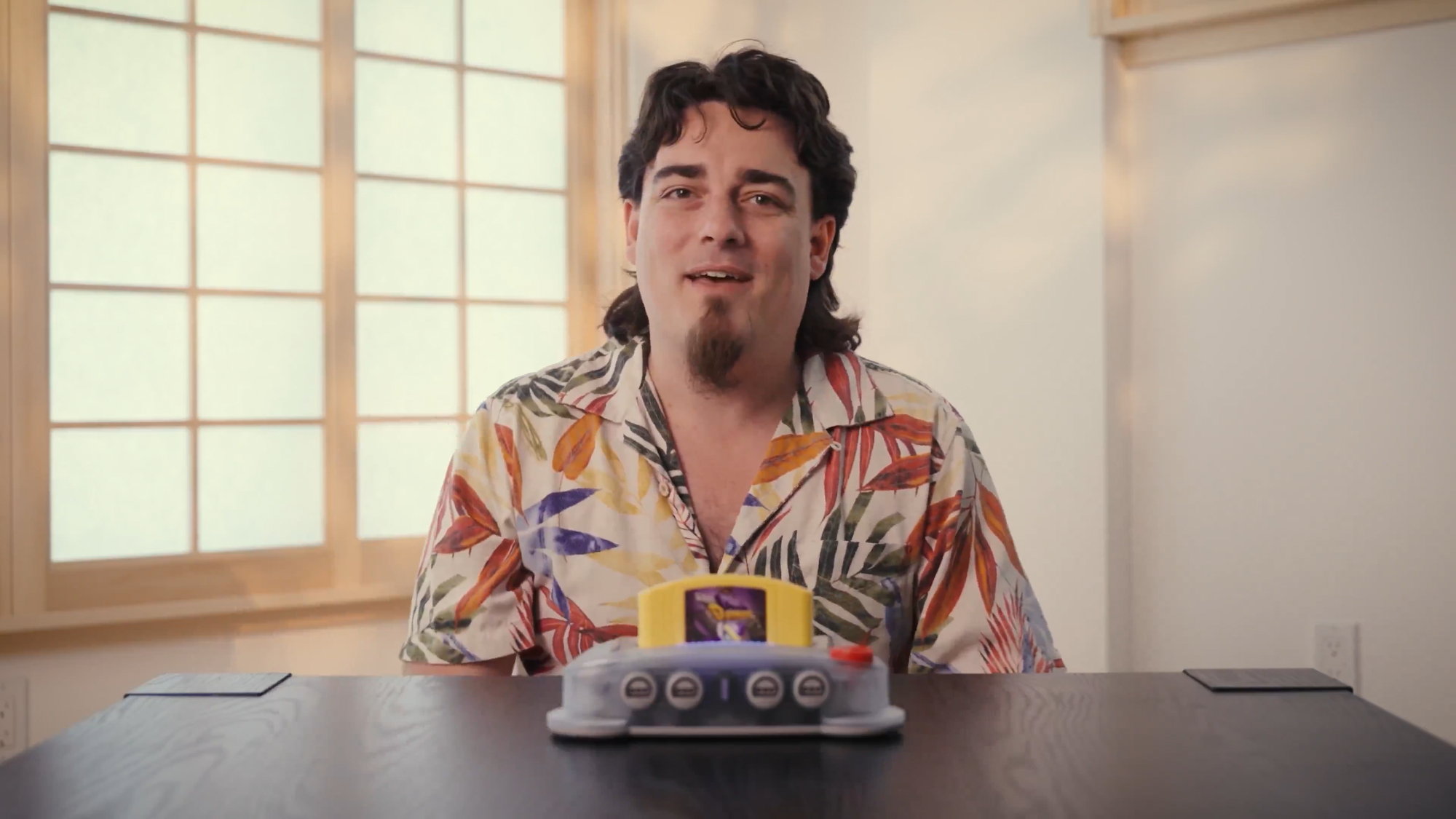
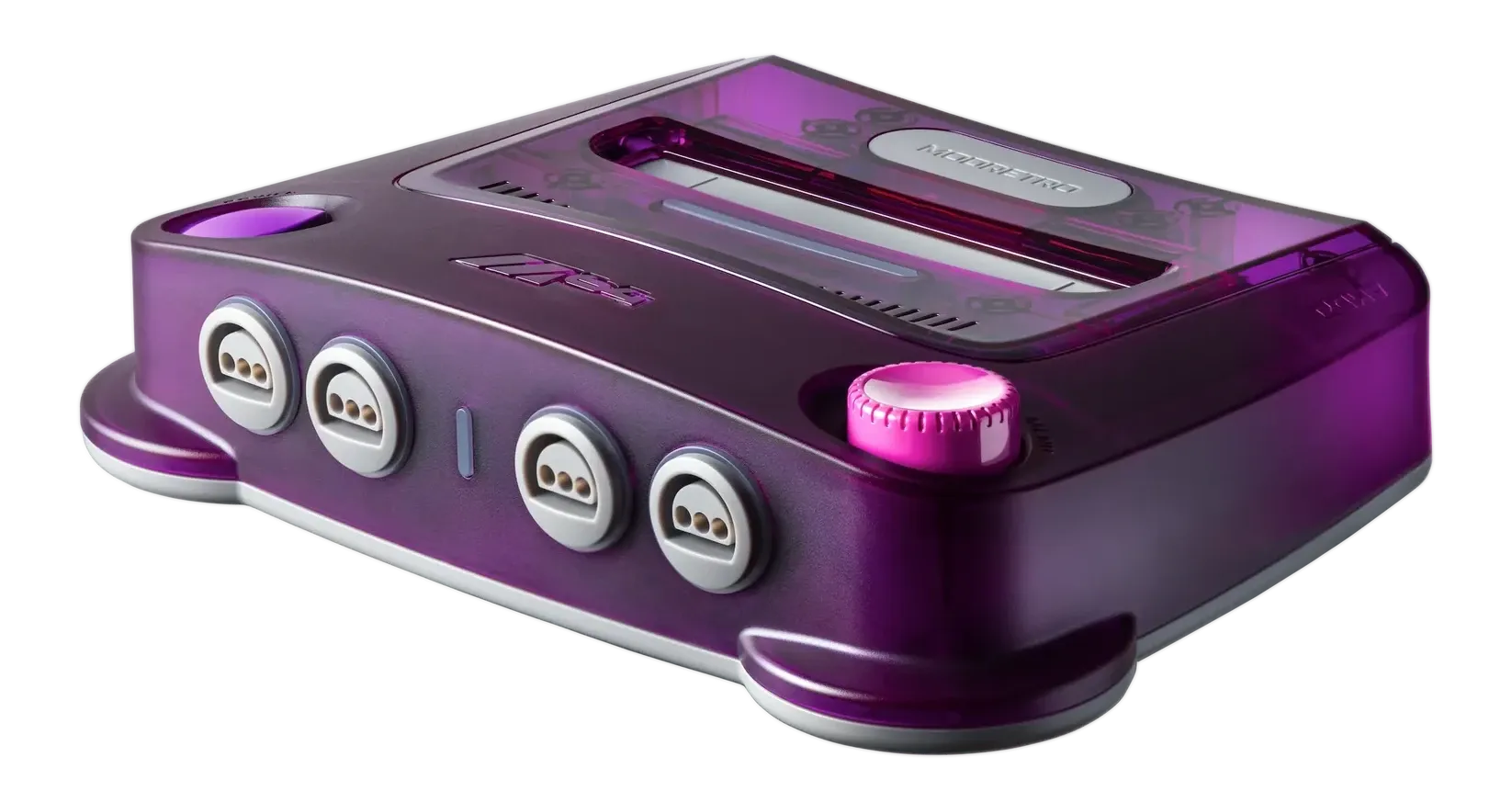
Palmer Lucky is an evil fucking worm and dipshit beneficiary of government contracts. He’s the Oculus jackass with a shitty soul patch who runs a military defense company called Anduril. I could continue to talk about the general ways I dislike him on a personal level, but I’ll instead focus on a specific one: He shares many of my hobbies, including an enthusiasm for retro gaming and FPGA hardware. If you see the company ModRetro, know that’s his company. ModRetro recently released an FPGA-based machine in the shape of the N64 called the M64. You do not, under any circumstances, need to buy a war crime N64. 

Do Not Buy The War Crime N64
If I can be super petty for a second: the knob on that thing looks atrocious. You're mixing matte and glossy! Credit: ModRetro.

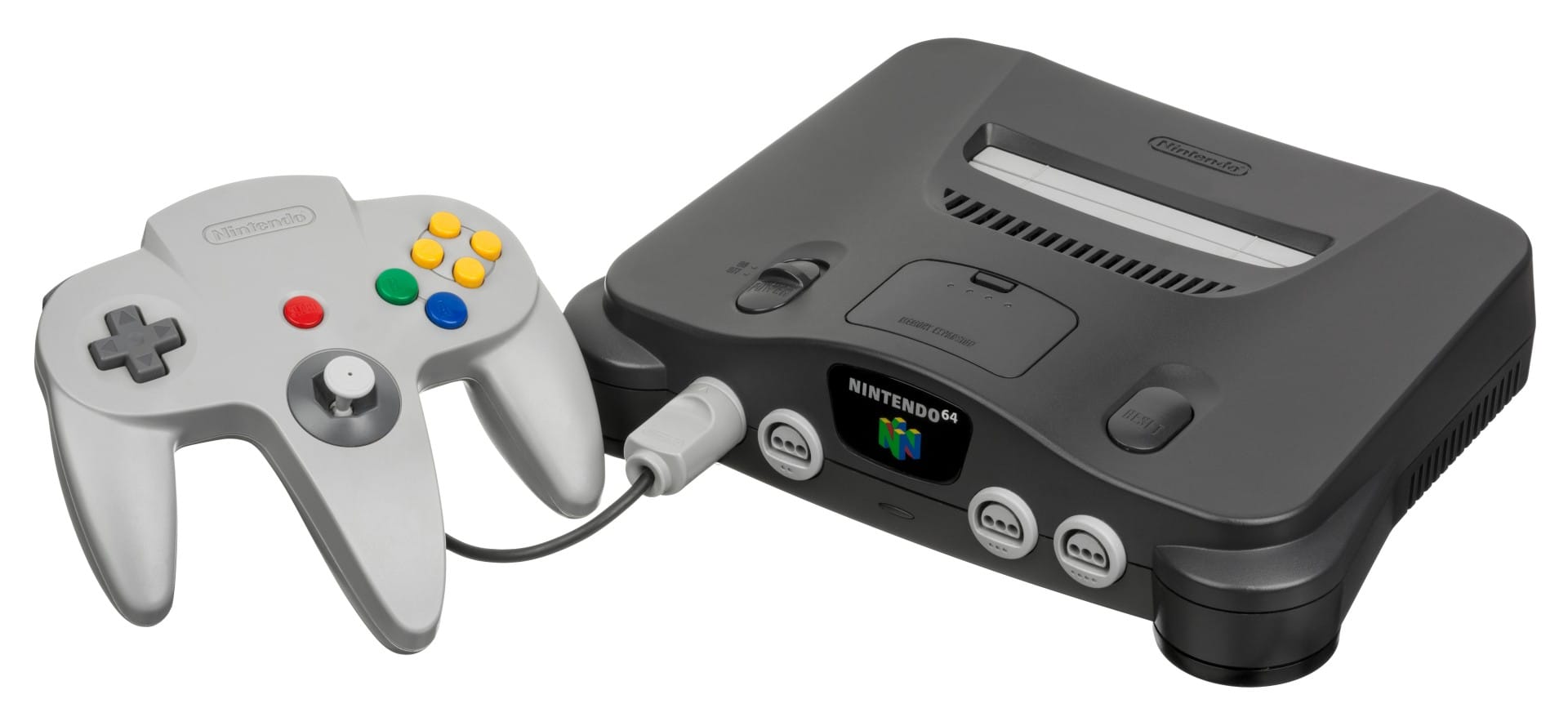
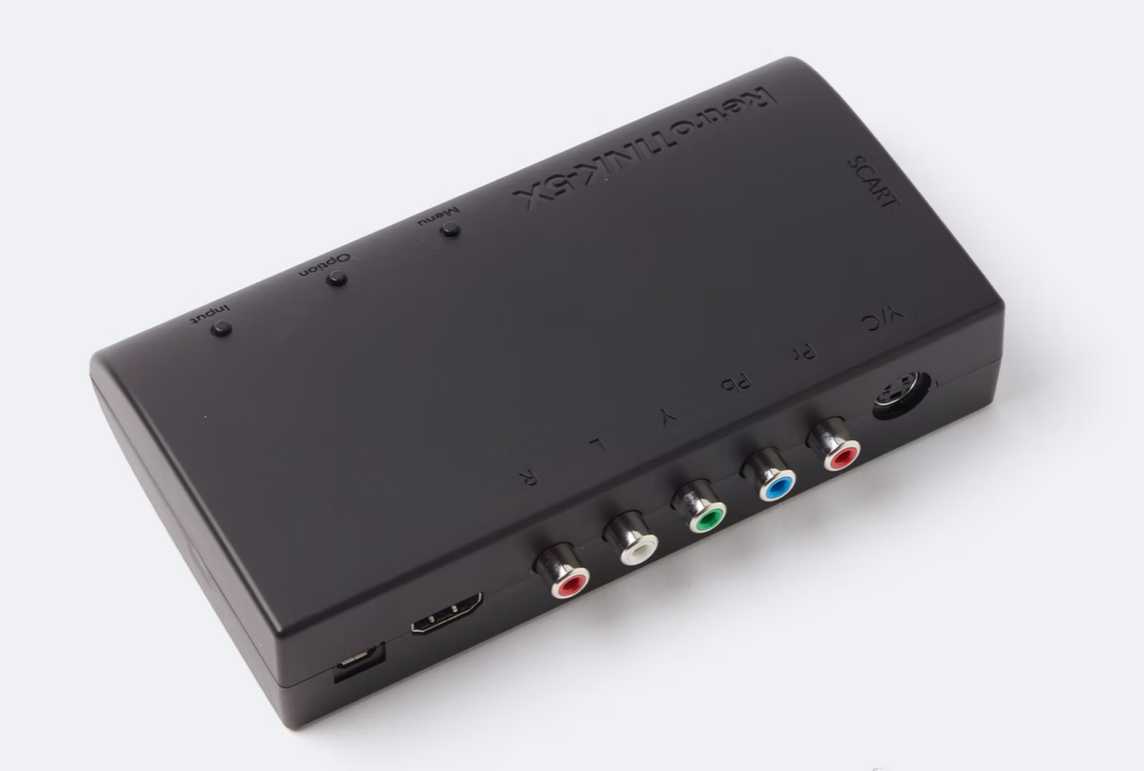
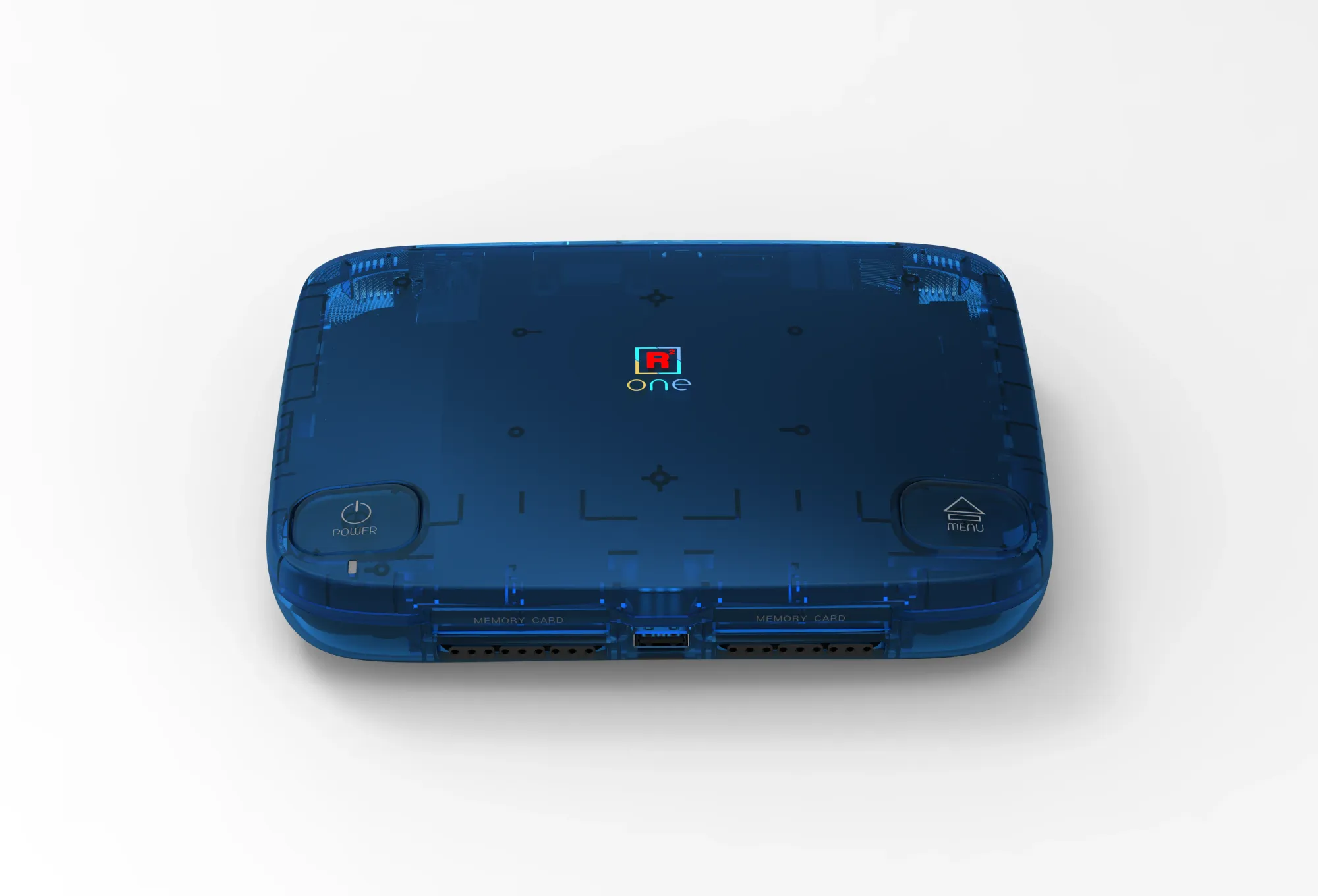
First let’s just talk about the practical: There’s no shortage of ways to play the N64. You can get original hardware and a CRT or an upscaler like the Retrotink, a piece of hardware that’s made by people who really care. You can also mod an HDMI port into an old N64 if you aren’t a coward. If you want something FPGA-based that plays cartridges, the Analogue 3D works. The Superstation One runs FPGA cores just fine. Or to hell with it, just get a MiSTer or even just download a god-fearing emulator. Nobody needs Palmer Luckey’s evil little device, particularly when the market has never been more saturated. 

This is not the first product ModRetro has put out. They also put an evil Game Boy out, and specifically put one out in “attack drone metal.” I hate these winking little shits. Not only are they using retro gaming to be fascists, they’re doing it in the corniest way humanly possible. 

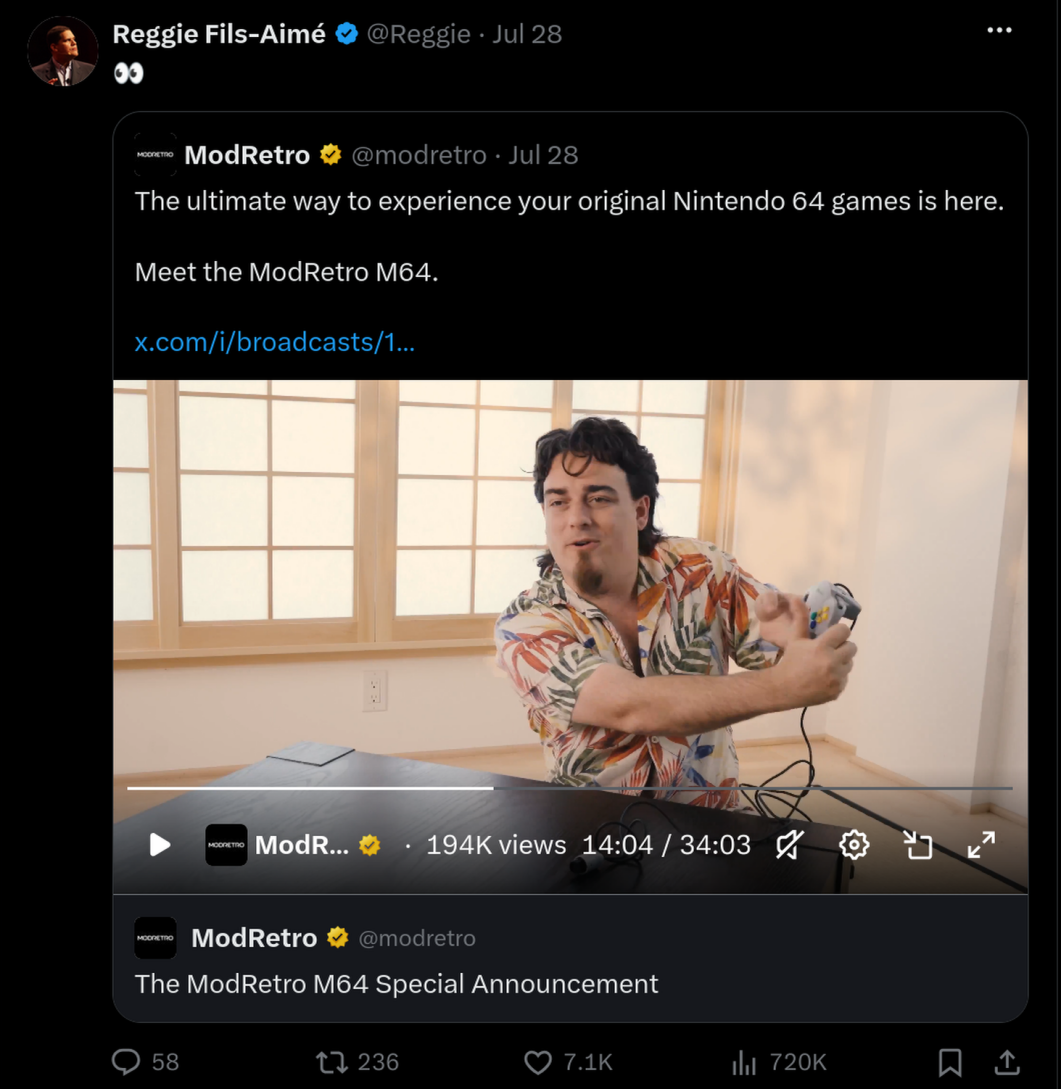
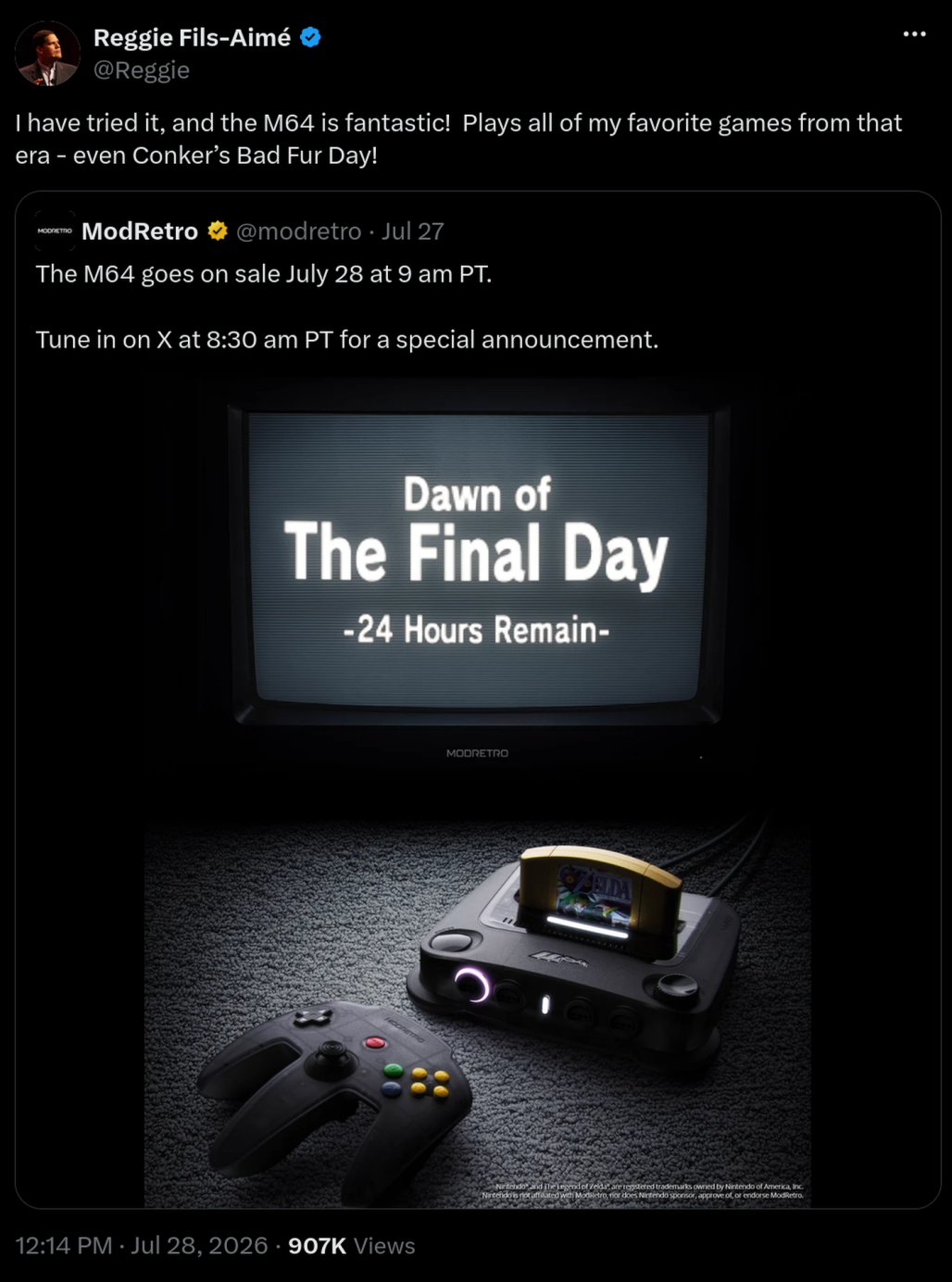
Former Nintendo of America President Reggie Fils-Aimé took to X, The Everything App twice in one day to signal boost that evil dipshit’s pet project. In the spirit of Hater Week, I’d like to officially state that Reggie can go fuck himself as well. 


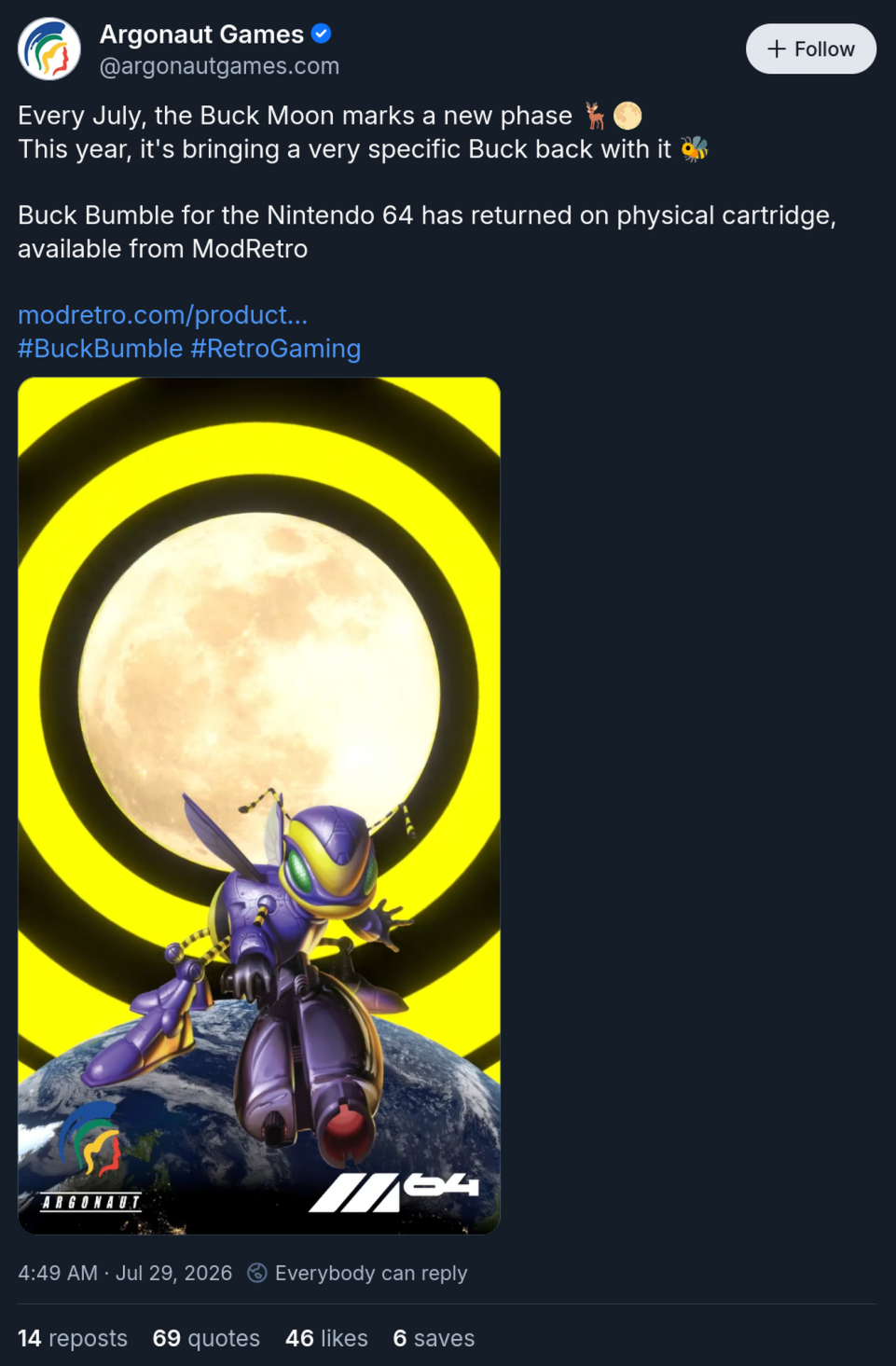
Argonaut Games also announced they’d be rereleasing Buck Bumble in collaboration with ModRetro, and immediately got dragged for it in the replies. Buck Bumble can also fuck off.

Do Not Buy The War Crime N64
Credit: Argonautgames on BlueSky

We cannot let these people feel comfortable in our hobby. Even if it’s just on a personal level, I’m sick of seeing them. The Video Game History Foundation’s Frank Cifaldi said it best last December: “I say this with zero irony: if you are even tangentially a part of a retro video game community, it is your civic duty to push back against this company and shun anyone who doesn't. This is fascism tapping gently at the door and as soon as you let it in, it's going to invite its friends.” 

If we do not draw a line somewhere, they will continue to bring their hatred to us. There’s no better time than the present.

Read the whole story
SimonHova
53 days ago
reply
This is fascism tapping gently at the door and as soon as you let it in, it's going to invite its friends

It's a sad statement for the times that I've seen this quote in so many places.
Greenlawn, NY
Share this story
Delete
1 public comment
rocketo
53 days ago
reply
Palmer Lucky is an evil fucking worm and dipshit beneficiary of government contracts. He’s the Oculus jackass with a shitty soul patch who runs a military defense company called Anduril. I could continue to talk about the general ways I dislike him on a personal level, but I’ll instead focus on a specific one: He shares many of my hobbies, including an enthusiasm for retro gaming and FPGA hardware. If you see the company ModRetro, know that’s his company. ModRetro recently released an FPGA-based machine in the shape of the N64 called the M64. You do not, under any circumstances, need to buy a war crime N64.

also: https://paletteswap.site/different-colors/nintendo-hoping-youve-forgotten-it-enslaved-that-one-switch-hacker-by-now/
seattle, wa

The Lost Joy of Music Piracy

2 Comments

“I was responsible for the dancing baby meme,” Rob Sheridan laughs over a video call. Now better known as an accomplished graphic designer and the former creative director of Nine Inch Nails, Sheridan’s list of accolades date back to 1997, when he created a website dedicated to the low-resolution animated GIF.

The first thing I notice when our interview begins is his t-shirt, which bears the ironic slogan “HOME TAPING IS KILLING MUSIC,” a phrase once printed on record sleeves in the UK during the ‘80s alongside a cassette tape resembling a skull and crossbones, later used in the logo of the infamous BitTorrent tracker The Pirate Bay. During his decades-long career in the music industry, Sheridan has stood out as one of the few outspoken advocates of media piracy.

“I was really early on the internet, making websites just as a hobby in high school to teach myself HTML,” he explains. “I remember the first time I was able to download the leak of a new song, Nine Inch Nails’ 1997 single ‘The Perfect Drug.’ It was played on a radio station and someone recorded it, and was able to upload it in this RealAudio format which compressed music in a way that made it manageable to download for the first time.”

While attending New York’s Pratt Institute the following year, Sheridan dove headfirst into the world of illegal file sharing. “Very much in the way that Napster originated, people had their own servers with files in public folders. You’d connect to the local network at your dorms and people had their mp3 collections on there. I ended up discovering a whole bunch of music that way. I downloaded a whole bunch of albums that I never had the opportunity to try because every album was an 18 dollar investment. That kind of radicalized me, and I became a fan of so much more music.”

While barely finished with his first year of art classes, a Nine Inch Nails fan site Sheridan had created caught the attention of the band, and in 1999 he was hired to design their official webpage.

“I ended up leaving school and moving down to New Orleans, living down at their studio and working there. One thing led to another and I became a creative partner, then art director, and doing more stuff,” he explains. “They'd all been kind of holed up in this studio for a couple years following up their huge album [The Downward Spiral], and it was all very secretive. I was the kid coming in with a bunch of energy and all this technological interest—like hey, check out this LimeWire thing. Everything we did with Nine Inch Nails was very confrontational with new technology.”

As an avid pirate suddenly finding himself in the midst of the music business, Sheridan saw the issue from a different angle than most of the suits he was surrounded by. “I got brought in and we were being flown to New York, the label was taking us out to these expensive dinners and paying for everything—top notch hotels, everyone had private cars and drivers. There was so much money going around, and it wasn't the artists who were rolling in cash. I remember one of my first comments to Trent [Reznor] was, ‘Now I see why CDs cost 18 dollars.’”

By the time Nine Inch Nails’ comeback album With Teeth hit stores in 2005, it had already been available to download on Oink for a number of weeks. Rather than joining the growing number of artists angry at their fans for not waiting to pay, Sheridan says they saw it as a failure on the side of the music industry. “We knew that the moment we sent it to the record label it was gonna leak. At the end of the day, Trent is a music fan too—if someone is like, ‘Hey, you can listen to the new album from your favorite band right now, or you can be good and wait three more weeks,’ of course you’re not going to wait. It's not really a moral question at that point. Instead of blaming them, we looked at the problem—which was the record label. That’s when we decided what we’re going to do is release the digital version first through our site, and then send it to the label. The CD can come out later.”

For the rollout of their next album, Sheridan and Reznor leaked singles via USB drives hidden inside the venues of their 2007 tour, kicking off a masterclass in viral marketing: an alternate reality game immersing fans in the dystopian future of Year Zero. Clues encoded in the mp3 files and tour merch directed participants to a string of websites and phone lines revealing further details of the album’s concept, music videos, cover art, and eventually the album in its entirety.

In October of 2007, Oink’s servers were raided by police and the website’s creator was arrested. The following day, Sheridan penned a eulogy for the website in a blog post titled The Death of Oink, the Birth of Dissent, and a Brief History of Record Industry Suicide, where he called the website “the most complete and most efficient music distribution model the world has ever known,” and added that he would gladly pay a large monthly fee for any legal music service of the same level.

The next year, Nine Inch Nails released their album The Slip for free via BitTorrent and direct download from their website, where Reznor wrote, “Thank you for your continued and loyal support over the years—this one's on me.” Though they weren’t the first major band to release an album for free during this era (Radiohead released In Rainbows via the pay-what-you-can model the previous year), this method marked the beginning of a change that would take the rest of the industry years to catch up to.

“It was us acknowledging how much of a download world it was, but it was also just continuing to experiment,” Sheridan says of the decision. “Part of that was acknowledging very early on that collecting your audience is very valuable. We got the email addresses of everyone that got it for free so that we could reach out to them about the tour that we were about to do, and sell tickets to that. Everyone was trying to figure out what their place was in terms of how to have an economy around music at that time. They had made music so expensive to access, while at the same time you've got Apple being like, ‘You can store a million songs in your pocket!’—okay well, I don't have a million dollars.”

Following Oink’s closure, record labels pressed on with business as usual, and a new private tracker called What.CD quickly sprung up to fill the void it left behind. In a short matter of time, the community would grow to match the vast library of its predecessor—a success which Sheridan sees as a product of the industry’s failure to adapt in an increasingly digital landscape. “I got on What.CD and kept rolling on there. It really was an answer to something that the music industry wasn't providing at the time. Now that’s kind of acknowledged by streaming music. It has a lot of major flaws, but kids today have no concept of how amazing it is. It should cost a lot more to be able to just flow through the entire history of music. You had to have been there in that private club to realize how special it is to have that access to music for everybody now.”

As exciting as this meticulously organized archive of free music was, I wouldn’t be able to invite my friends to let them join in right away. In order to acquire closely-guarded and highly sought-after invites, I would need to climb the rung of user classes to achieve the status of “Power User” by uploading a number of torrents myself. While at first it came off as unnecessarily elitist and gatekept in nature, the rules in place within the shadowy cabal of private trackers existed for a reason.

“If [trackers] are public and they're easy to get onto, that means they're also easy for law enforcement to get onto, so all they have to do is download the torrents and see who they're connecting to. Having a private site with some pretty hefty walls around it means that you are much more secure,” explains a former staff member and moderator of What.CD, who requested to go by the pseudonym ‘Brian’ during our interview.

“The other reason is that there’s no community on public sites,” he continues. “There are no accounts, there's no motivation really other than just your own goodwill, so it’s very common to download something and stop seeding it on your computer. Private trackers are built around having one account and one account only. They're built around tracking your ratio of upload to download. Those two things together provide a lot of incentive to continue seeding your content and making it available to other people. That’s what created the magic of private trackers being comprehensive and reliable.”

After passing the interview and becoming a member in 2010, Brian says his first impression of the website was something of awe. “Very quickly I understood what this site was—how much respect people had for it, and how much work it took to build and maintain. The community was very active on the forums and IRC,” he adds. “Still to this day, I've never seen such an actively maintained network of knowledge and output, it really sucked me in. Every band or album had a word cloud that showed connected artists, and I found a lot of music just by clicking around and optimistically downloading things. There were also the collages that people would make for their own personal taste, or by themes which ranged from, ‘Here are all the Pitchfork 10s,’ to, ‘Every album that has a train on the cover.’”

The following year, Brian became a staff member himself. “These places felt like some of the last survivors of the bulletin board style forums in a world that is now just Reddit and Instagram comments. There’s a real magic to that kind of communication. It was a lot of what I wanted in an internet community. I got involved on the interview team at the start. From there, they eventually asked if I wanted to handle more sensitive responsibilities and join the mod team.”

As a member of the mod team—the shadowy cabal within the shadowy cabal—Brian’s responsibilities mainly consisted of enforcing the rules surrounding user accounts, a task he says he handled when not occupied with high school homework assignments.

By this time, around 2011, What.CD had become the largest archive of music in human history. Taking the hard-earned lessons from their predecessor, the tracker had stayed under the radar of four-letter agencies. While operational security and potential legal action was always top of mind for staff, Brian says that during his tenure on the team, their largest perceived threat was a brief scare from the J.D. Salinger estate.

On What.CD, one of their most popular functions was the request system, a member-led bounty economy driven by the incentive of gaining valuable upload ratio. If a user wanted something that wasn’t already available on the website, they could create a “request” for it, offering a portion of their own upload credits to whoever was able to fulfill it. Typically, these requests could be filled by spending around $20 on Amazon or iTunes and uploading the files. For highly-sought after releases yet to hit shelves, other users chipped in on the bounty, creating a massive reward for whichever record store employee was willing to “borrow” a copy from the backroom before the release date, resulting in the website frequently becoming the originating source of album leaks online. The largest request on the website was for “The Ocean Full of Bowling Balls,” an unpublished short story by Salinger only known to exist in a locked room of the Princeton Library, where it was available by appointment to read under the strict supervision of staff.

“It was basically like a long running joke that it would never get filled,” Brian laughs. “And then somebody fucking did it.” In November of 2013, a What.CD user tracked down one of the 25 copies of the manuscript allegedly printed in 1999 in order to fill the request. The unexpected leak made headlines around the world, and the torrent file was quickly pulled. “It was known that the Salinger estate was very legally motivated, very litigious,” he says. “It would never be allowed to actually be on the website, so the hand was forced.”

While the unwanted attention raised alarms amongst staff, Brian says nothing came of it. “To the best of my knowledge, [action from law enforcement] never happened until the very end, and even that was pretty minor, but we were constantly paranoid about it. It was a huge thing on the back of our mind at all times.”

In November of 2016, users attempting to log into What.CD were shocked by a message displayed on the homepage, stating that, Due to some recent events, What.CD is shutting down. We are not likely to return any time soon in our current form. All site and user data has been destroyed. So long, and thanks for all the fish.

According to a French cybercrime website, authorities had seized a number of What.CD’s servers earlier that day. The sudden closure came as a surprise to their 165,000+ registered users, including staff like Brian. The site never returned, and no further details were ever made public to the mourning userbase. Even today, speaking about the loss of What.CD with an Anonymous stranger feels like recounting the death of a close friend.

“I feel like it’s probably okay to share the top level detail about this,” Brian says somberly. “What.CD’s security was very strong. It was run by very smart people who knew their stuff about being systems operators. Ultimately, some servers in the network were taken down by a French enforcement arm. They were just reverse proxies, which didn’t store anything actually sensitive, except maybe a connection that led to the real servers. That was the first and only time—that I'm aware of—that any kind of enforcement had been launched against the site. Even though nothing happened, even though there is a world where we could have just replaced the server and switched all the hosting in that country to something else and continued onward, the admins made the very reasonable decision to say, We are now in a different sector of risk, we’ve gone from zero actions taken to one action taken, we’re abandoning ship—and started deleting everything. There was no way of knowing whether they would follow the trail to the next server. It was obviously a very difficult decision and the admin I talked to after was really upset about it, but I'm sure many people agree it was also the sensible choice to make.”

Coinciding with the shutdown, streaming services had begun to reach the masses. As CD sales continued to plummet, labels moved away from physical releases, and major leaks became increasingly infrequent. Suddenly, anyone with a $10 monthly subscription had access to the entire world of music without even having to download it to their hard drive. In the wake of What.CD’s closure, I begrudgingly became a paying Spotify user. The record labels had finally won the war against music piracy.

Looking at the state of things now, much of what Sheridan predicted in his 2007 blog post has come true. Music has more or less become free, and we finally can pay a nominal fee for a service once offered only by illegal websites like Oink. Reflecting on his thoughts from nearly two decades ago, Sheridan isn’t so certain that we’ve arrived in a promised land.

“The idea at the time that music will eventually be free was more of a statement of where this is heading. Streaming is not economically sustainable for artists. The solution to all of this should have also been something that renegotiated how artists are paid for music. Instead, you've got artists who can’t even afford their bills even though they’re getting millions of streams a month, and you have Spotify paying Joe Rogan 100 million dollars. Artists are the ones being mistreated, while the middlemen are making a ton of money. There’s this whole world where people exist just to show up in the middle and take a big chunk of the money from something they had no part in creating. The Spotify model is like saying your favorite restaurant should just be giving you free food until you decide to buy a t-shirt. If artists weren’t also being screwed on the touring side, then you could think of streaming as marketing, but there’s too many examples being dangled in front of our face of how much money is being funneled away to billionaires and corporations, and artists always come last. That’s my frustration with where we’ve ended.”

Read the whole story
SimonHova
53 days ago
reply
One thing I realize now being an old Gen X'er is that even when you spent a lifetime trying to build the world that you wished for, reality has a way of making it suck as bad as when you started.
Greenlawn, NY
Share this story
Delete
1 public comment
rocketo
53 days ago
reply
"“The idea at the time that music will eventually be free was more of a statement of where this is heading. Streaming is not economically sustainable for artists. The solution to all of this should have also been something that renegotiated how artists are paid for music. Instead, you've got artists who can’t even afford their bills even though they’re getting millions of streams a month, and you have Spotify paying Joe Rogan 100 million dollars. Artists are the ones being mistreated, while the middlemen are making a ton of money."
seattle, wa
Next Page of Stories